Your creative well isn’t broken, it’s just running on empty fumes.
TLDR:
- Writer’s block happens when your brain exhausts available story inputs, not when you lose motivation
- The solution is feeding your imagination new raw material, not forcing yourself to write terrible prose
- AI brainstorming tools can rapidly generate the creative fuel you need to break through at any stage
The Mythology of Grinding Through
I used to think writer’s block was a character flaw. Picture me at 2 AM, staring at a blinking cursor like it held the secrets of the universe, convinced that “real writers” just powered through. The writing advice echoing in my head? Just write badly. Push through the resistance. Set a timer and force words onto the page.
Turns out, that’s like telling someone with an empty gas tank to press the accelerator harder.
Here’s what I learned after years of banging my head against blank pages: your brain isn’t being lazy when it stops generating story ideas. It’s actually doing exactly what it should do when it runs out of creative inputs to work with. The fix isn’t willpower, it’s restocking the pantry.
Why Traditional Solutions Miss the Mark
Most writing advice treats block like a motivation problem. You’ll find endless articles about:
- Writing schedules and accountability partners
- Morning pages and stream-of-consciousness exercises
- Pomodoro timers and word count goals
These approaches can help with consistency, sure. But when you’re genuinely stuck on plot direction or character motivation, no amount of scheduled writing time will conjure ideas from thin air.
I remember being 35,000 words into a fantasy novel when my protagonist reached a crossroads, literally and figuratively. I knew she needed to make a choice that would propel the story forward, but after three days of staring at that scene, my brain offered nothing but crickets.
The Input Solution
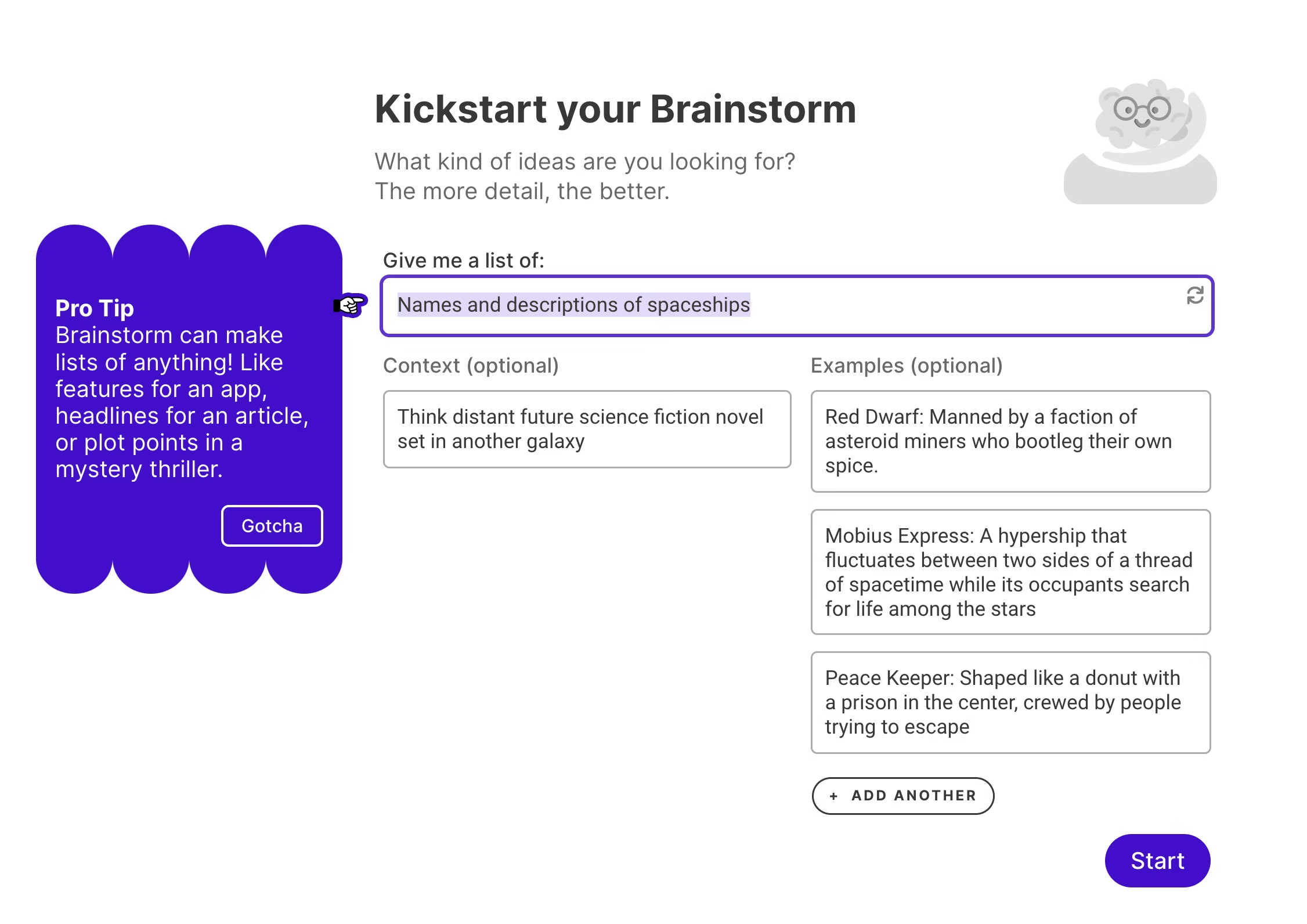
This is where AI brainstorming becomes genuinely useful. Tools like Sudowrite’s brainstorm feature work by flooding your creative system with rapid-fire possibilities. Not to replace your imagination, but to jumpstart it when it’s stalled.
The process feels a bit like having a hyperactive writing partner who throws out dozens of “what if” scenarios while you nod or shake your head. Some suggestions are terrible. Others spark something unexpected. The key is volume and speed, generating enough raw material that your brain can start making connections again.
For visual storytellers wanting to expand beyond text, AI image generation tools can provide similar creative fuel for character design and world-building. Sometimes seeing a face or landscape can unlock story directions you hadn’t considered.
Making It Work in Practice
The best approach I’ve found involves treating AI brainstorming like a creative buffet. Generate options quickly, keep what resonates, discard the rest. Your job isn’t to use every suggestion, but to let the volume of possibilities wake up your dormant story instincts.
Once you’ve broken through and finished that manuscript, platforms like PublishDrive can help you get your completed work into readers’ hands across multiple formats and distribution channels.
The goal isn’t to outsource creativity, it’s to prime the pump when your well runs dry. Sometimes your brain just needs better fuel.