Multiple timelines in fiction are like trying to conduct two orchestras at once while blindfolded.
TLDR:
- Your brain wasn’t designed to track multiple story threads simultaneously, leading to inevitable continuity errors
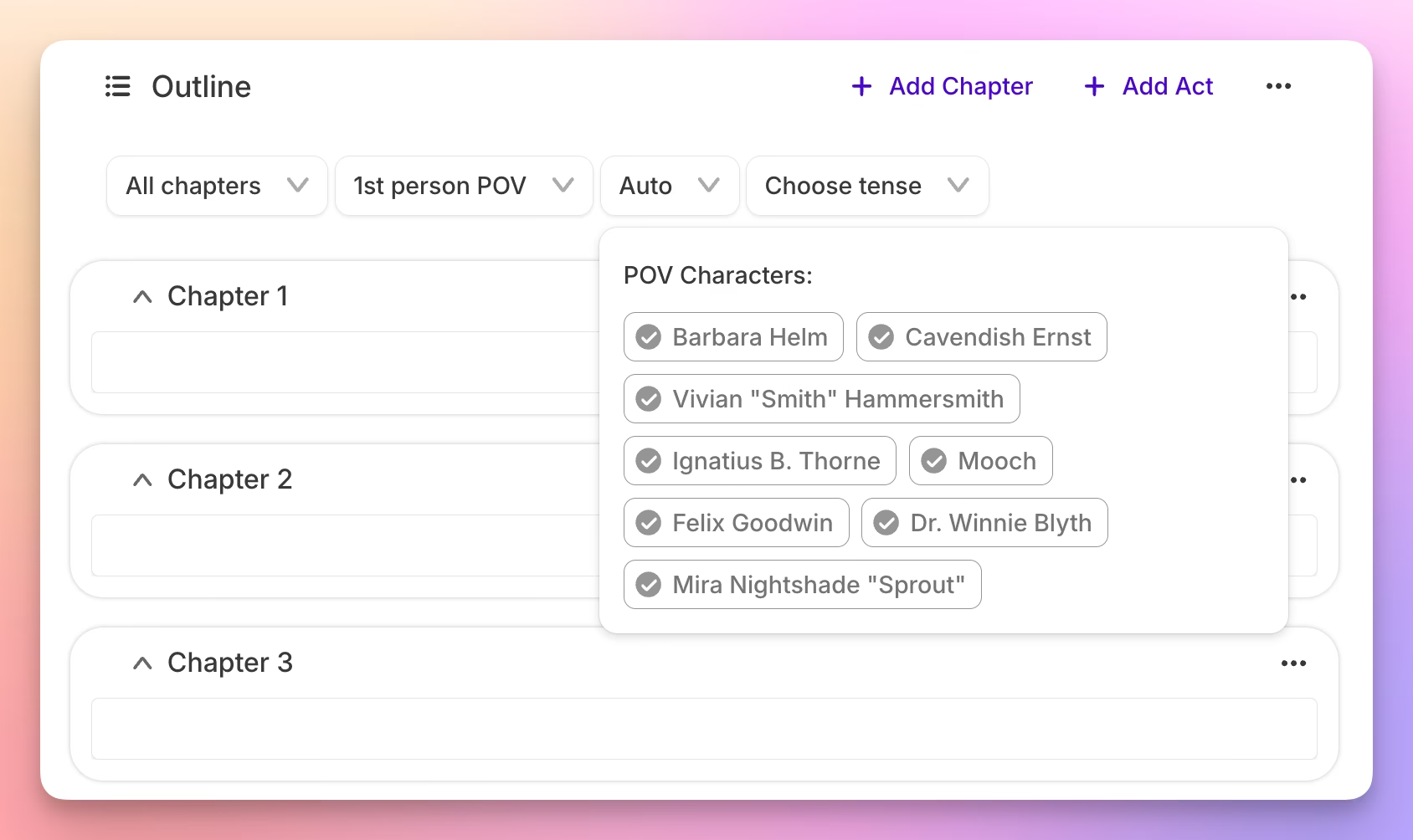
- AI writing tools can maintain persistent memory across timelines, catching contradictions before readers do
- Setting up timeline-specific tracking systems before you start writing saves massive headaches during revision
The Beautiful Mess of Multi-Timeline Fiction
I’ve been there. Chapter 23, and suddenly my 1960s protagonist is using a cell phone. Or wait, did I kill off the grandmother in the present timeline or the past one? Actually, scratch that. Did she even have a grandmother?
Multi-timeline stories are seductive. They promise depth, complexity, that satisfying moment when past and present click together like puzzle pieces. But here’s what nobody tells you: your working memory can juggle about seven items at once. A dual-timeline novel has roughly seven thousand.
The issue isn’t creativity. It’s data management masquerading as storytelling.
Why Our Brains Betray Us
Three weeks separate the chapter where your character takes the train to Lisbon and the one where someone mentions her flight there. You won’t remember. But your reader? They’ll catch it faster than you can say “plot hole.”
This is where AI tools designed for fiction writing become genuinely useful. AI fiction writing platforms can track character details, timeline events, and cross-references with the patience of a saint and the memory of an elephant.
Or maybe think of it differently. You wouldn’t build a house without blueprints. Why draft a complex timeline without proper scaffolding?
The Smart Writer’s Approach
Before you write a single scene, create what I call timeline tags. Character ages, locations, major world events. Feed these into your chosen system whether that’s a sophisticated AI tool, a simple spreadsheet, or index cards taped to your wall.
Some writers swear by visual timelines. If you’re working on something that needs professional presentation later, consider how AI image generation with commercial licensing might help you create timeline graphics or character references.
The Revision Reality Check
Here’s the uncomfortable truth: your first draft will have timeline errors. Accept this. Plan for it. Budget extra revision time specifically for continuity.
Read each timeline separately first. Then read them interwoven. It’s tedious work, but so is explaining to readers why your protagonist’s eye color changed between 1943 and 2024.
When you’re ready to share your beautifully consistent multi-timeline masterpiece with the world, platforms like publishing services for books, ebooks, and audiobooks can help you reach readers who appreciate complex storytelling done right.
The goal isn’t perfect timelines. It’s believable ones. Sometimes that’s harder than it sounds.