Sometimes the best way forward is to stop moving entirely.
TLDR
- Taking intentional breaks from writing prevents creative burnout and provides fresh perspective
- Real-world experiences serve as unexpected sources of inspiration and metaphors for storytelling
- Strategic stepping away gives writers agency in an industry where rejection is the norm
The Sting of 35 Nos
I’ve been watching fellow writers navigate the brutal mathematics of rejection lately, and it reminds me of my own dance with literary gatekeepers. When Ann McCallum Staats shared how her astronaut biography faced 35 rejections before finding a home, I felt that familiar knot in my stomach. We’ve all been there, haven’t we? That moment when you realize your beloved manuscript might be heading toward the digital equivalent of a desk drawer.
But here’s the thing that caught my attention about her story. Instead of immediately pivoting to another project or diving into revisions, she did something counterintuitive. She stopped. Not the kind of stopping that leads to Netflix binges and existential dread, but purposeful, directed pauses.
Museums as Writing Workshops
There’s something almost rebellious about walking away from your keyboard when deadlines loom. Yet Staats discovered what many of us forget in our hurried pursuit of productivity: inspiration doesn’t always arrive through AI fiction writing tools or craft books.
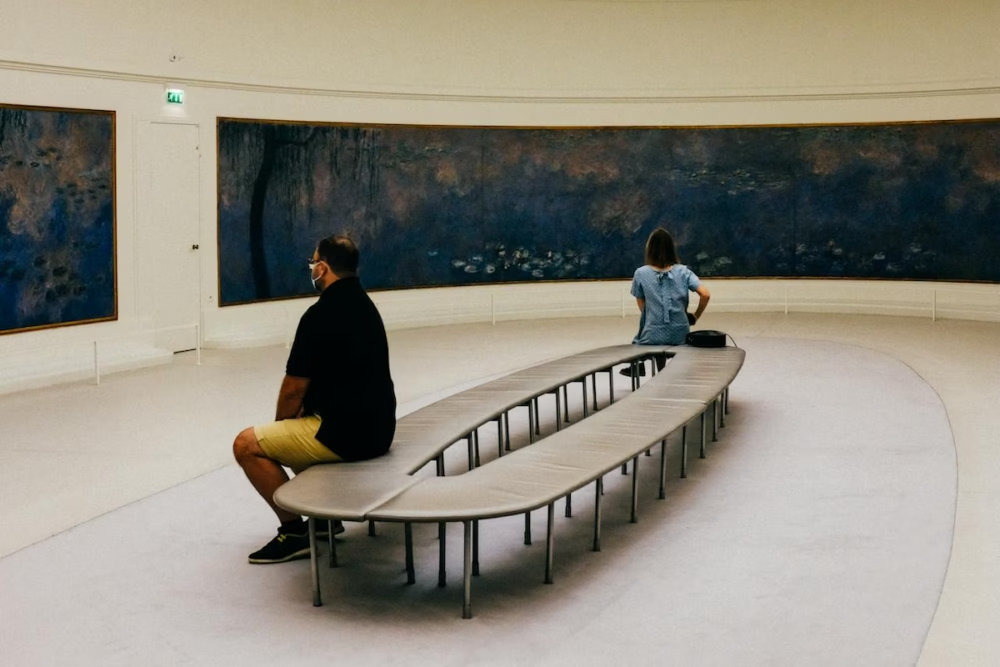
Her visits to museums became unexpected research trips. The African American Museum taught her about fortitude. Planet Word reminded her about language’s lyrical possibilities. These weren’t calculated research missions but organic discoveries that later enriched her storytelling.
I think about my own creative dry spells, usually spent staring at blank documents or scrolling through AI image generation platforms for inspiration. Maybe I’ve been looking in the wrong places.
Head Writing vs Hand Writing
The concept of “head writing” resonates deeply. We’re so focused on word counts and daily pages that we forget writing happens everywhere. Actually, scratch that. Not forget, exactly. We know it intellectually but rarely honor it practically.
Consider this: while you’re worried about your manuscript sitting idle, your subconscious is probably working overtime. Those moments of apparent inactivity might be when your brain finally has space to make unexpected connections.
Taking Back Control
Perhaps the most valuable insight here is about agency. In a publishing landscape where so much feels beyond our control, strategic breaks become acts of self-determination. Whether you’re preparing submissions through platforms like PublishDrive or wrestling with endless revisions, stepping away isn’t giving up. It’s choosing your own rhythm.
The next time rejection emails pile up or your story feels stuck, remember: sometimes the most productive thing you can do is close your laptop and go outside. Your story will wait. And when you return, you might just bring back exactly what it needs.