Military sci-fi readers can smell a fake from orbit, and trust me, they will let you know when your protagonist magically becomes a general by page fifty.
TLDR
- Military sci-fi demands technical precision that generic AI tools simply cannot provide without specialized fiction-writing infrastructure
- Building comprehensive worldbuilding databases prevents embarrassing rank confusion and tech contradictions that plague amateur mil-SF
- Strategic AI integration can enhance military authenticity without turning your novel into a technical manual
The Research Rabbit Hole Problem
I once spent three weeks researching naval gun classifications for a single battle scene. The irony? Those three weeks produced exactly two usable sentences. Military science fiction occupies this peculiar space where readers possess encyclopedic knowledge of weapons systems, rank structures, and tactical doctrine. They notice when your dropship carries destroyer-class armaments. They cringe when Marines salute indoors.
The traditional solution involves drowning in Jane’s Defence Weekly until your browser crashes. But here’s the thing: more research rarely equals better storytelling. What you need is better infrastructure.
Why Generic AI Falls Apart
Most AI writing tools approach military scenes like Hollywood does: lots of dramatic posturing, zero substance. Ask a standard chatbot for a boarding action and you’ll get “soldiers moved with practiced precision” rather than anything resembling actual military procedure.
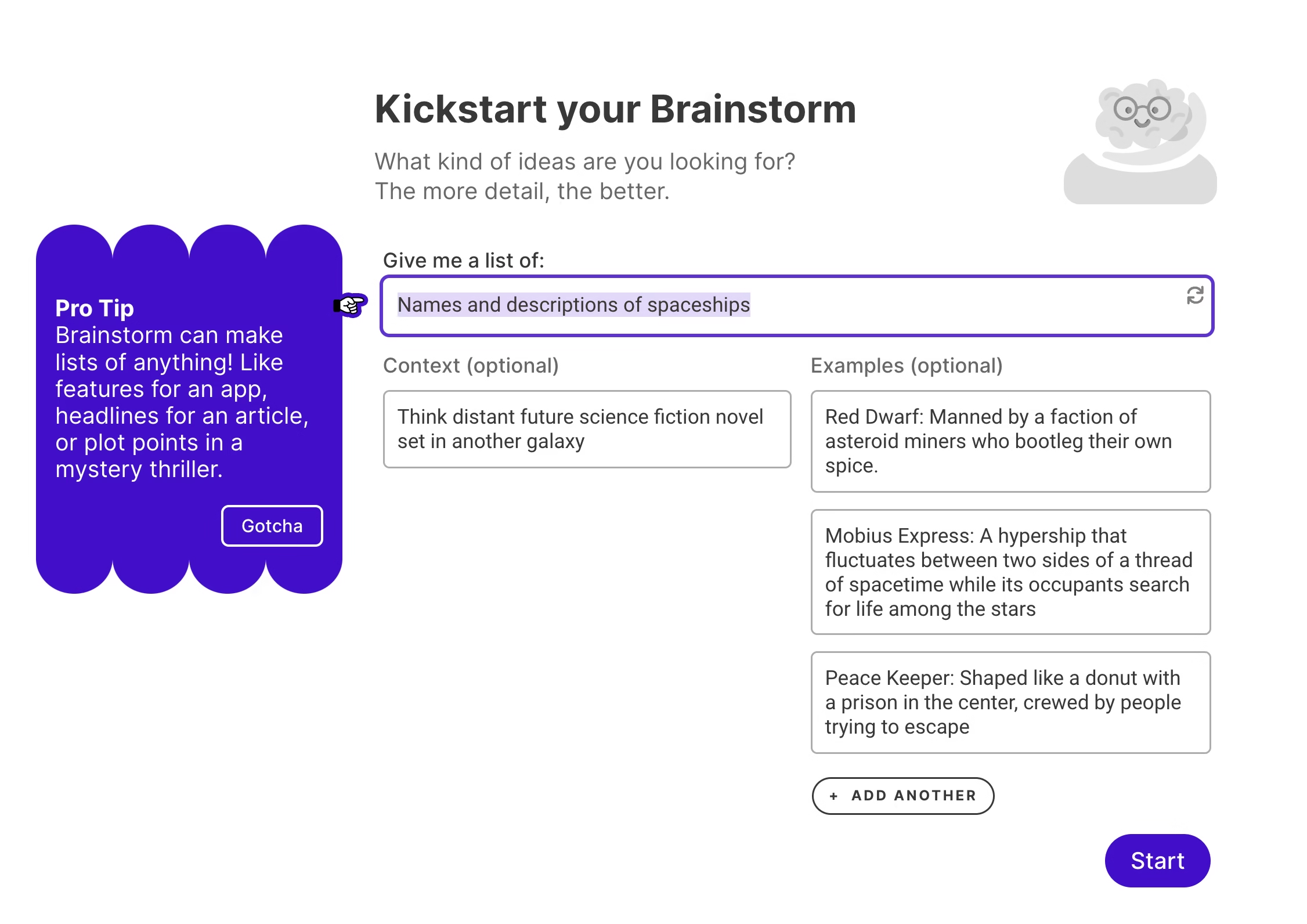
Fiction-specific AI tools like Sudowrite understand narrative requirements. They can maintain complex hierarchies across forty chapters without contradicting themselves. Actually, let me correct that slightly: they can maintain consistency if you build the framework properly.
Building Your Military Infrastructure
Start with worldbuilding cards for essential tech. Not every piece of equipment, just the plot-critical gear:
- Capital ships and dropships with specific capabilities and crew requirements
- Infantry weapons including range, payload, and crucial limitations
- Communication systems because nothing breaks a battle scene like impossible coordination
For each piece, define what it cannot do. Limitations drive conflict. A weapon without weaknesses becomes a plot-killing deus ex machina.
Then tackle rank structures per faction. When your Reaver captain encounters a Colonial sergeant, the hierarchy should feel authentic. These details separate professional mil-SF from amateur hour.
Visual and Publishing Considerations
Military sci-fi benefits from strong visual elements. AI image generation tools can help visualize your tech specs, though nothing replaces good prose for conveying tactical tension.
When you’re ready to deploy your battle-tested manuscript, platforms like PublishDrive handle the logistics while you focus on perfecting those crucial technical details that make mil-SF readers salute rather than revolt.
The goal isn’t becoming a military expert. It’s building systems that keep your fictional wars believable while your story stays engaging.