Worldbuilding isn’t just for fantasy authors with color-coded maps sprawled across their desks.
TLDR: Three Things Every Writer Should Know
- Worldbuilding applies to every genre, from contemporary romance to literary fiction
- Inconsistent world details kill reader immersion faster than plot holes
- AI tools can help organize scattered setting notes into coherent systems
The Coffee Shop Contradiction
I learned this lesson the embarrassing way. Chapter four of my first novel had the protagonist’s favorite coffee shop on Elm Street. By chapter twelve, that same cozy haven had mysteriously relocated to Oak Avenue. My editor circled it in red ink with a single devastating word: “Where?”
That’s when it clicked. Even my contemporary romance needed worldbuilding. The scent of burnt espresso, the wobbly table by the window, the barista who always misspelled names. These details weren’t just decoration; they were the scaffolding holding my story together.
Beyond Dragons and Magic Systems
Here’s what most writing advice gets wrong: worldbuilding isn’t about creating elaborate fantasy realms. It’s about making your fictional world feel lived-in, whether that world is a small Midwestern town or a spaceship hurtling toward Mars.
Your contemporary heroine’s apartment matters. Does she live in a gentrified neighborhood where rent consumes half her salary? Can she hear her neighbor’s terrible violin practice through paper-thin walls? These aren’t trivial details; they’re the texture that makes readers believe.
The Memory Problem
Human brains aren’t designed to track dozens of setting details across 80,000 words. I’ve tried everything: sticky notes that fall off my monitor, Google Docs I forget to update, elaborate spreadsheets that become archaeological dig sites.
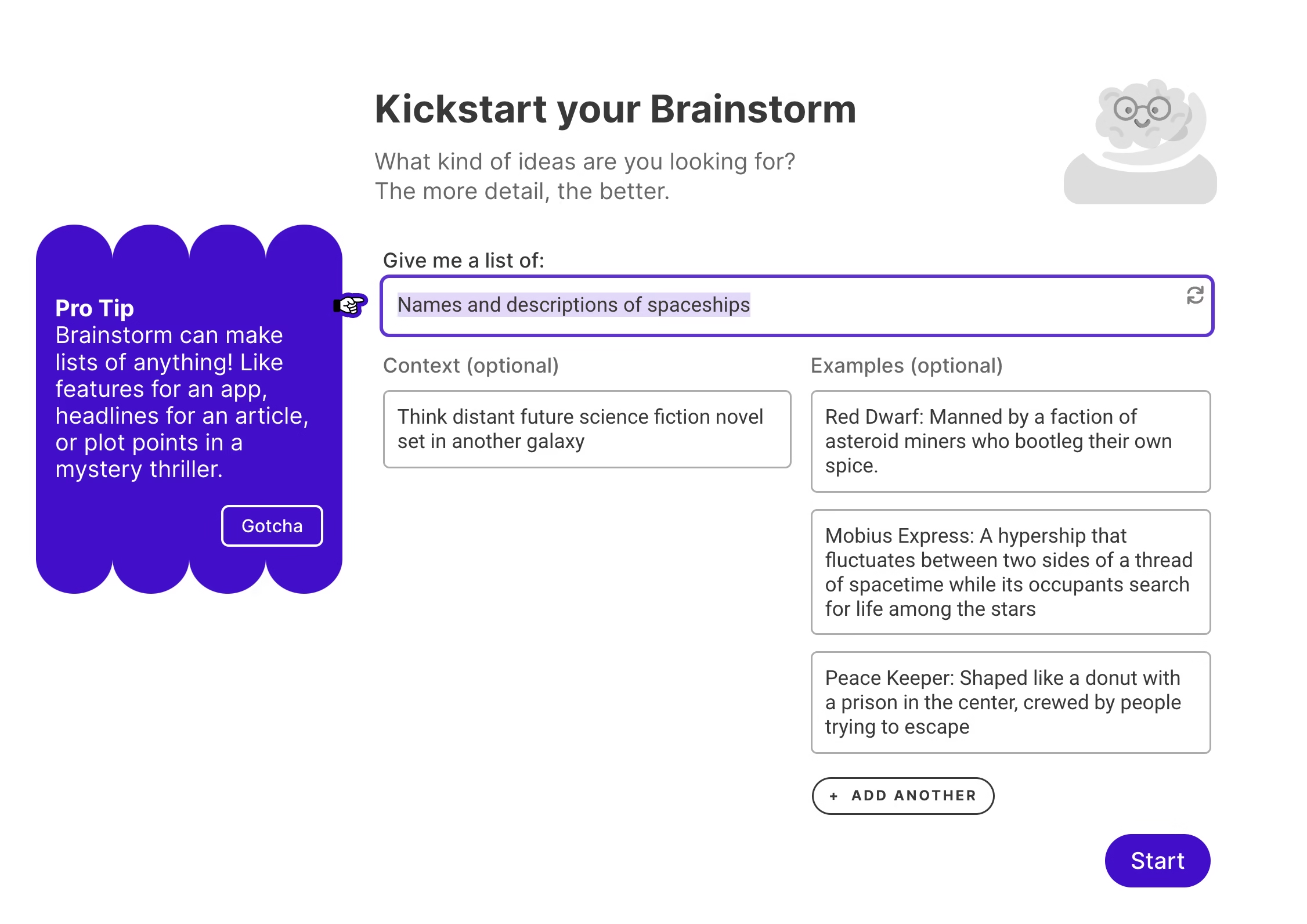
This is where AI tools like Sudowrite start making sense. Not to replace creativity, but to handle the bookkeeping that kills it. When you can generate consistent visual details using AI image tools or organize world elements in a centralized system, your brain stays free for the fun stuff.
Making Worlds That Stick
The difference between forgettable fiction and the kind readers recommend comes down to immersion. Readers want to feel like they could walk down your fictional street and order coffee from that barista who can’t spell.
This doesn’t require exhaustive detail. It requires consistent detail. The kind that comes from treating your contemporary setting with the same respect fantasy authors give their magic systems.
Whether you’re planning to publish traditionally or independently, readers notice when worlds feel real. They also notice when they don’t.