Every story lives somewhere, even if you’ve never drawn a single map.
TLDR:
- Worldbuilding happens in every genre, not just fantasy epics with dragons
- Consistency beats creativity when readers are deciding whether to keep turning pages
- Smart organization systems prevent the small details from becoming big headaches
The Coffee Shop Conundrum
I learned this lesson the hard way when my romance heroine’s favorite café somehow migrated three blocks between chapters. My editor circled it in red ink with a question mark that felt like a tiny judgment. That’s when it hit me: I’d been worldbuilding all along without calling it that.
Your contemporary thriller’s cityscape needs just as much internal logic as Middle Earth. Actually, maybe more, because your readers live in cities. They know when something feels off about rush hour traffic or how long it takes to walk twelve blocks in heels.
Beyond the Dragon Maps
We’ve somehow convinced ourselves that worldbuilding only matters for writers who spend weekends sketching fictional continents. Wrong. Dead wrong.
Every time you decide whether your character can afford organic groceries, you’re making a worldbuilding choice. Every time you mention the neighbor’s dog barking at 2 AM, you’re adding texture to a world that either feels real or doesn’t.
The difference between forgettable fiction and the kind readers press into friends’ hands often comes down to these tiny, accumulating details. Does this place feel lived in? Can I smell the coffee, hear the traffic, sense the economic anxiety?
The System That Actually Works
Here’s what most writers do wrong: they keep world details in seventeen different places. A notebook. Three Google docs. Sticky notes that fall off the monitor. Then they spend revision time playing detective with their own manuscript.
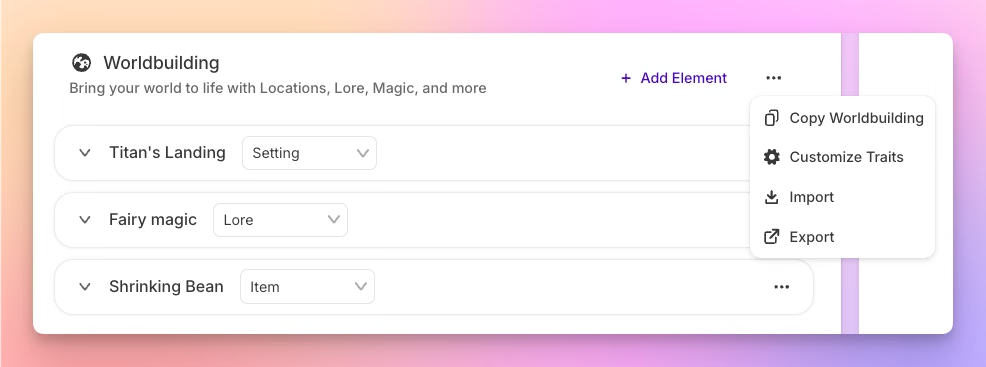
The solution isn’t perfect memory (impossible) or endless planning (soul crushing). It’s having one place where your world lives and breathes alongside your actual writing. Tools like AI fiction writing platforms can track your world details while you draft, catching those wandering coffee shops before they become editorial headaches.
If you’re building visual elements for your world, AI image generation with commercial licensing can help you see what you’re describing.
Making It Real
The best worldbuilding feels invisible. Readers shouldn’t notice your careful attention to how long subway rides take or which neighborhoods your characters can actually afford. They should just sink deeper into a story that feels solid under their feet.
When you’re ready to share that carefully built world with readers, publishing platforms for books, ebooks, and audiobooks can help get your work into the right hands.
Your world is already there, waiting in the margins of your story. You just need to pay attention to it.