The graveyard of abandoned manuscripts is littered with seventeen-tier magic systems that never made it past page ten.
TL;DR
- Build worlds from your protagonist’s actual experience outward, not from encyclopedias down
- Every genre needs worldbuilding, whether it’s a coffee shop romance or intergalactic war
- AI tools can now remember your world’s details automatically, eliminating the constant re-explaining problem
The Encyclopedia Trap
I used to be that writer. You know the type. I’d spend months crafting elaborate political systems for kingdoms my characters would glimpse once through a carriage window. The smell of old leather notebooks filled with unused lore still makes me wince a little.
Here’s what nobody tells you about worldbuilding: most of it should happen after you know what your story actually needs. Your protagonist doesn’t care about the seventeen varieties of magical wheat unless they’re starving in chapter twelve.
Beyond Dragons and Spaceships
Every story lives in a world, even if that world is a Tuesday morning Starbucks. The way your barista character notices the specific hiss of the espresso machine, the unspoken hierarchy between morning regulars, the particular shade of green the corporate overlords chose for the aprons. That’s worldbuilding.
Contemporary fiction writers often skip this step, thinking worldbuilding only applies to fantasy. Wrong. Your modern-day divorce lawyer navigates just as complex a world as any wizard, complete with:
- Specific jargon and power dynamics
- Unwritten social rules
- Sensory details that ground readers in place
- Cultural assumptions that shape behavior
The Memory Problem
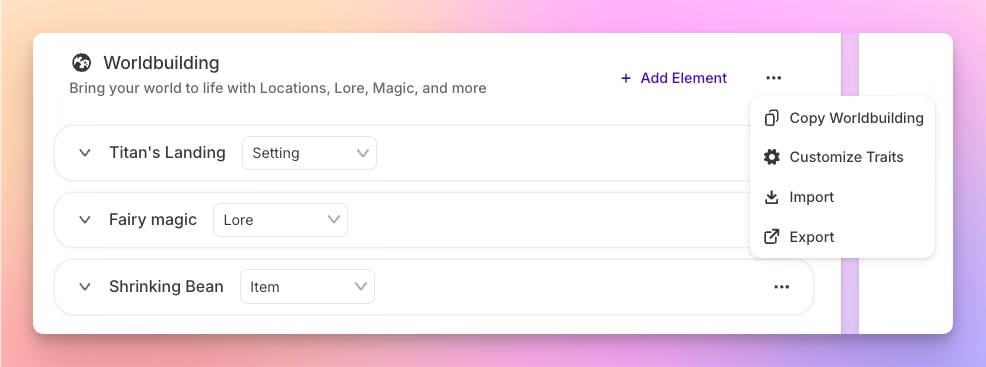
Traditional writing often means endless scrolling through notes, trying to remember if you established that the tavern smells like cinnamon or cardamom. Tools like Sudowrite’s AI fiction writing platform solve this by storing worldbuilding details in cards that automatically inform the AI as you write.
No more inconsistent descriptions. No more forgetting that your detective has a scar above her left eyebrow, not her right.
Building Smart, Not Hard
Start with what your protagonist touches, sees, smells. Does the air taste different in your dystopian city? What does the leather feel like on those spaceship controls? Build outward from these moments.
Once you’ve got visual elements locked down, consider expanding to AI image generation tools with commercial licensing to create consistent visual references. Sometimes seeing your world helps you write it better.
The Publishing Reality
Here’s the thing about all this careful worldbuilding work: readers will only see the tip of the iceberg, and that’s exactly how it should be. The depth shows in the confidence of your prose, not in exposition dumps. When you’re ready to share that carefully crafted world, platforms like PublishDrive for publishing books, ebooks, and audiobooks can help get your work to readers who’ll appreciate the subtle details you’ve woven in.
Build what you need. Use what you build. Let everything else stay buried in your notes where it belongs.