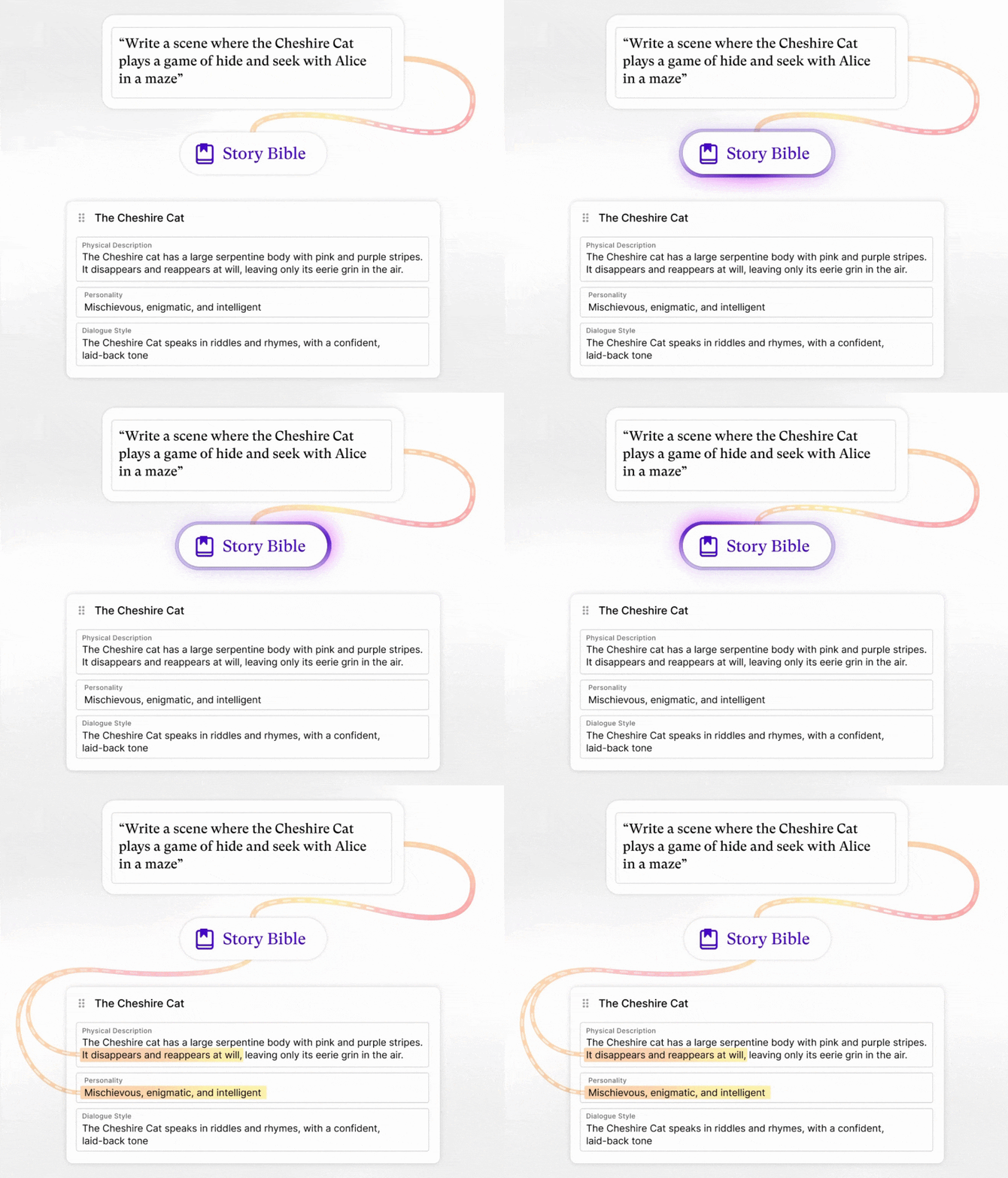
Most writers treat their story bible like a junk drawer that never gets organized again.
TLDR:
- Traditional story bibles are dead documents that writers abandon after initial creation
- Effective story bibles create interconnected layers where each section builds on the previous one
- AI-powered tools can maintain living story bibles that actually reference your world-building during writing
The Graveyard of Good Intentions
I’ve been there. You know that moment when you’re neck-deep in chapter fifteen and realize your protagonist’s hometown has somehow migrated three hundred miles north? Or when your carefully crafted magic system suddenly operates by completely different rules because you forgot what you wrote six months ago?
The traditional approach feels logical enough. Create character sheets. Build a world. Make an outline. File everything away in neat folders and tabs. Then never look at them again because who has time to flip between seventeen different documents while trying to write actual prose?
Why Most Story Bibles Fail
Here’s the thing about those template-heavy approaches floating around online: they treat storytelling like filling out tax forms. Each section exists in isolation. Your character development doesn’t talk to your world-building. Your outline ignores your style notes.
I spent years building these elaborate planning documents that felt more like archaeological digs than living resources. Beautiful spreadsheets that I’d consult maybe twice before diving into the actual writing and hoping for the best.
The Living Document Revolution
What if your story bible could actually participate in your writing process? Tools like AI fiction writing platforms are changing how we think about story planning. Instead of static reference materials, these systems create interconnected webs where each story element builds on the others.
Think of it like this:
- Your initial brain dump shapes your synopsis
- Your synopsis informs character development
- Your characters influence world-building decisions
- Everything feeds into scene-by-scene planning
Each layer references the others, creating consistency without the mental gymnastics of cross-referencing twelve different tabs.
Beyond the Writing: The Full Creative Ecosystem
Once you’ve got your story bible working as intended, the creative possibilities expand rapidly. Maybe you need custom cover art that actually reflects your world-building details. AI image generation with commercial licensing can translate your story bible elements into visual representations.
Eventually, you’ll want to get that carefully planned novel into readers’ hands through publishing platforms for books, ebooks, and audiobooks. But that’s getting ahead of ourselves.
Start Simple, Build Smart
The best story bible isn’t the most comprehensive one. It’s the one you’ll actually use three months from now when you can’t remember why your villain chose that particular revenge scheme. Start with the basics: core premise, main characters, essential world rules. Let each piece inform the next instead of trying to build everything simultaneously.
Your future self, drowning in chapter twenty-seven revisions, will thank you for the roadmap.