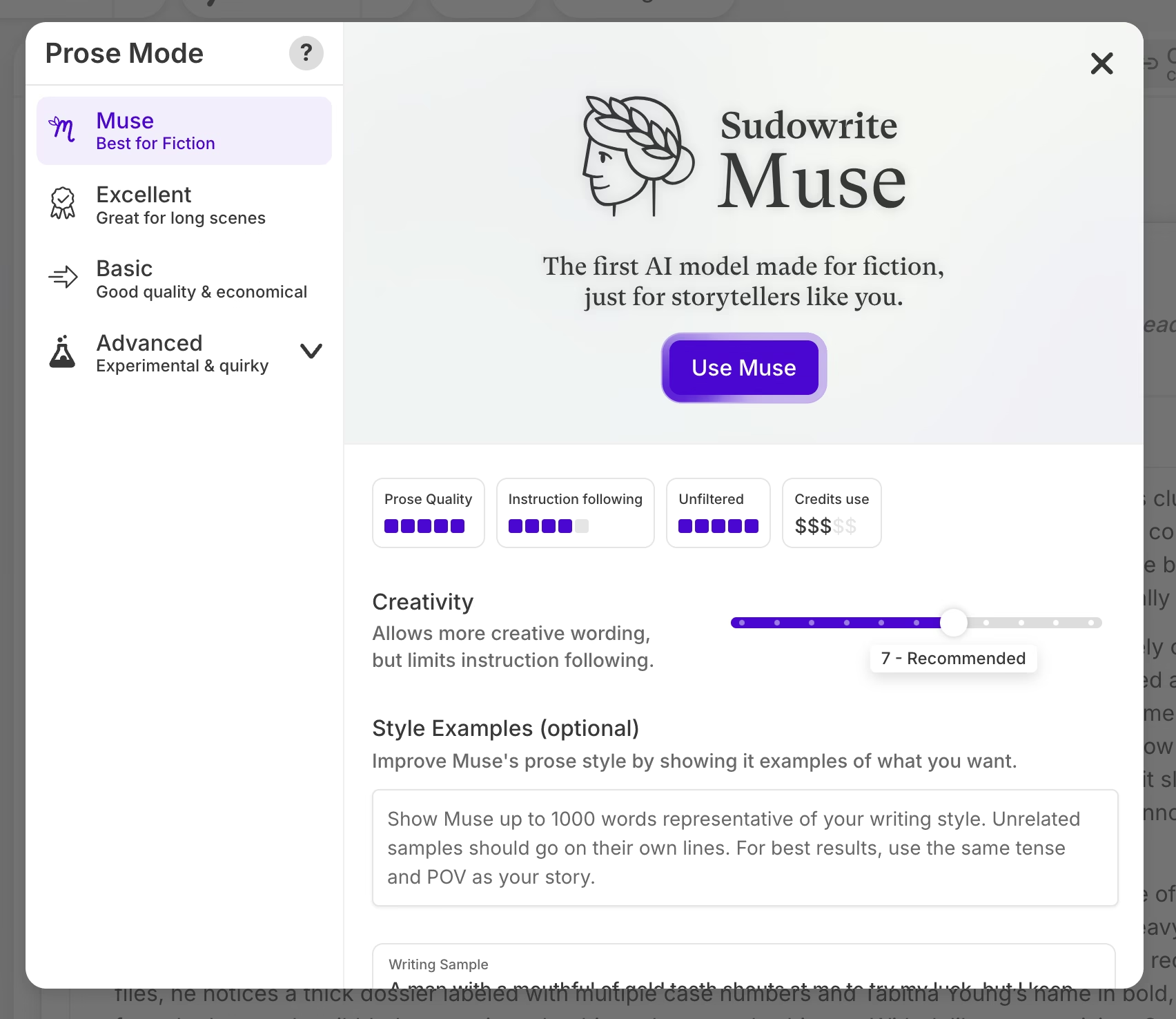
The curse of choice paralysis hits hardest when you’re staring at a dropdown menu that might as well be written in ancient hieroglyphics.
TLDR: Different AI prose models excel at different genres, switching between them can transform your writing quality, and matching your story’s emotional needs to the right AI partner is more art than science.
The Great AI Casting Call
I’ve watched writers agonize over AI model selection like they’re choosing a life partner. The truth? It’s more like casting directors picking actors for specific roles. You wouldn’t cast the same person to play both Hamlet and a Marvel superhero, would you?
Each AI model brings its own personality quirks to the table. Some are flowery poets who can’t write a simple sentence without adding three metaphors. Others are minimalist architects, building clean prose that gets out of its own way. The secret sauce isn’t finding the “best” model but finding your scene’s perfect dance partner.
When I first discovered AI fiction writing tools, I made every rookie mistake in the book. Used the wrong model for a tender romance scene and got prose that sounded like a medical textbook. Oops.
Genre Matchmaking 101
Here’s what thousands of writers have learned through trial and beautiful error:
- Romance and Horror: Muse dominates here, dripping sensory details like honey from a broken jar
- Fantasy and YA: Claude 3.7 Sonnet balances world-building with emotional punch
- Literary Fiction: Claude 3 Opus constructs sentences with architectural precision
- Thrillers: Muse again, but dialed up to eleven for intensity
Actually, let me revise that. The real magic happens when you start switching models mid-project. Use one for dialogue-heavy scenes, another for introspective moments. It’s like having a whole writers’ room at your fingertips.
The Proof Is in the Prose
I fed the same prompt to different models once. “A detective enters an abandoned house at midnight.” The variations were stunning. One model gave me clinical observations. Another painted shadows that seemed to breathe and whisper.
The model optimized for emotional intensity didn’t just describe darkness; it made darkness feel like a character plotting against my protagonist. That’s the difference between functional prose and prose that grabs readers by the collar.
Your Creative Workflow Revolution
Smart writers aren’t loyal to one model. They’re strategic about deployment. Start with AI image generation for visual inspiration, then match your prose model to your scene’s emotional temperature.
Writing a cozy mystery tea scene? Different model than your serial killer’s internal monologue. Trust me on this.
Once you’ve crafted your masterpiece through strategic model switching, publishing becomes the next adventure. The beauty of understanding your AI partners deeply means your final product reads like it came from one brilliant, slightly schizophrenic human brain.
Stop playing model roulette. Start casting your AI co-writers with intention.