The best stories happen when your characters hijack the keyboard and steer you somewhere you never planned to go.
TLDR: The Discovery Revolution
- Traditional AI tools force rigid planning that kills spontaneous storytelling
- Modern AI can now follow your creative instincts without demanding outlines first
- The combination of human intuition and AI support creates stronger discovery writing than either approach alone
The Control Freak Problem
Most AI writing assistants act like that friend who won’t go on a road trip without mapping every rest stop. They want your three-act structure, your character arcs, your plot points all lined up like soldiers before they’ll write a single sentence. Which is exactly backward if you’re the kind of writer who discovers the story by living inside it.
I’ve watched too many discovery writers try to force themselves into plotter mode just to use AI tools. It’s like watching someone try to paint with their non-dominant hand. Sure, you might get something recognizable, but you’ve killed the magic that made you want to create in the first place.
When AI Gets Out of Your Way
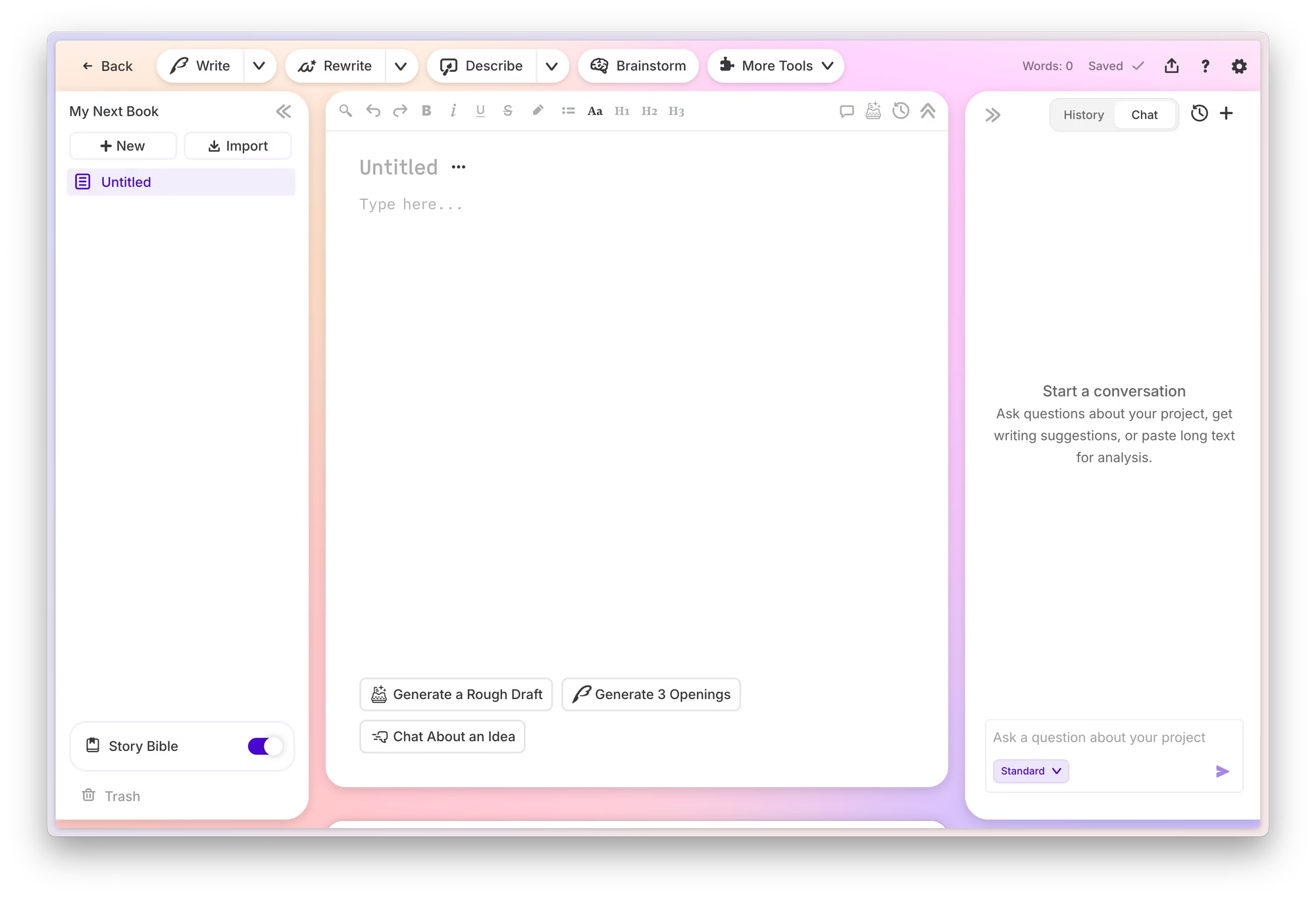
The breakthrough comes when AI stops demanding your homework and starts reading over your shoulder instead. Tools like Sudowrite for AI fiction writing can pick up your story’s thread from thousands of words of existing prose and continue weaving without missing a beat. No plot summary required.
Picture this: you’re 35,000 words deep in a mystery and your detective just found evidence that changes everything. You know the feeling in your gut is right, but you can’t see where it leads. Instead of staring at a blank page or abandoning the thread, AI can explore that path with you, maintaining your voice and world while your subconscious catches up.
The Creative Partnership That Actually Works
Here’s what surprised me about AI-assisted discovery writing: it doesn’t make you lazy. It makes you braver. When you know you have a creative partner that can help you explore dead ends without losing momentum, you take bigger risks. You let characters make more dangerous choices.
The practical benefits stack up quickly:
- Stuck mid-scene? Generate dialogue options that fit your characters
- Lost a subplot thread? Ask AI to trace it back through your manuscript
- Hit a wall? Brainstorm plot directions that honor what you’ve already built
Beyond the First Draft
Once you’ve got a completed manuscript, the creative toolkit expands. Visual storytellers can generate cover concepts with AI image generation tools that match their story’s mood. When you’re ready to share your discovery with readers, platforms like PublishDrive handle the publishing logistics while you focus on the next story calling to be discovered.
The future of writing isn’t about replacing human intuition with algorithmic precision. It’s about amplifying that beautiful moment when a story surprises its own creator. Sometimes the best writing happens when you’re not entirely in control.