Most AI writing tools turn your carefully crafted prose into something that reads like it was written by an overeager marketing intern.
TLDR:
- Generic AI tools flatten writing voice because they’re trained on everything from Wikipedia to customer service scripts
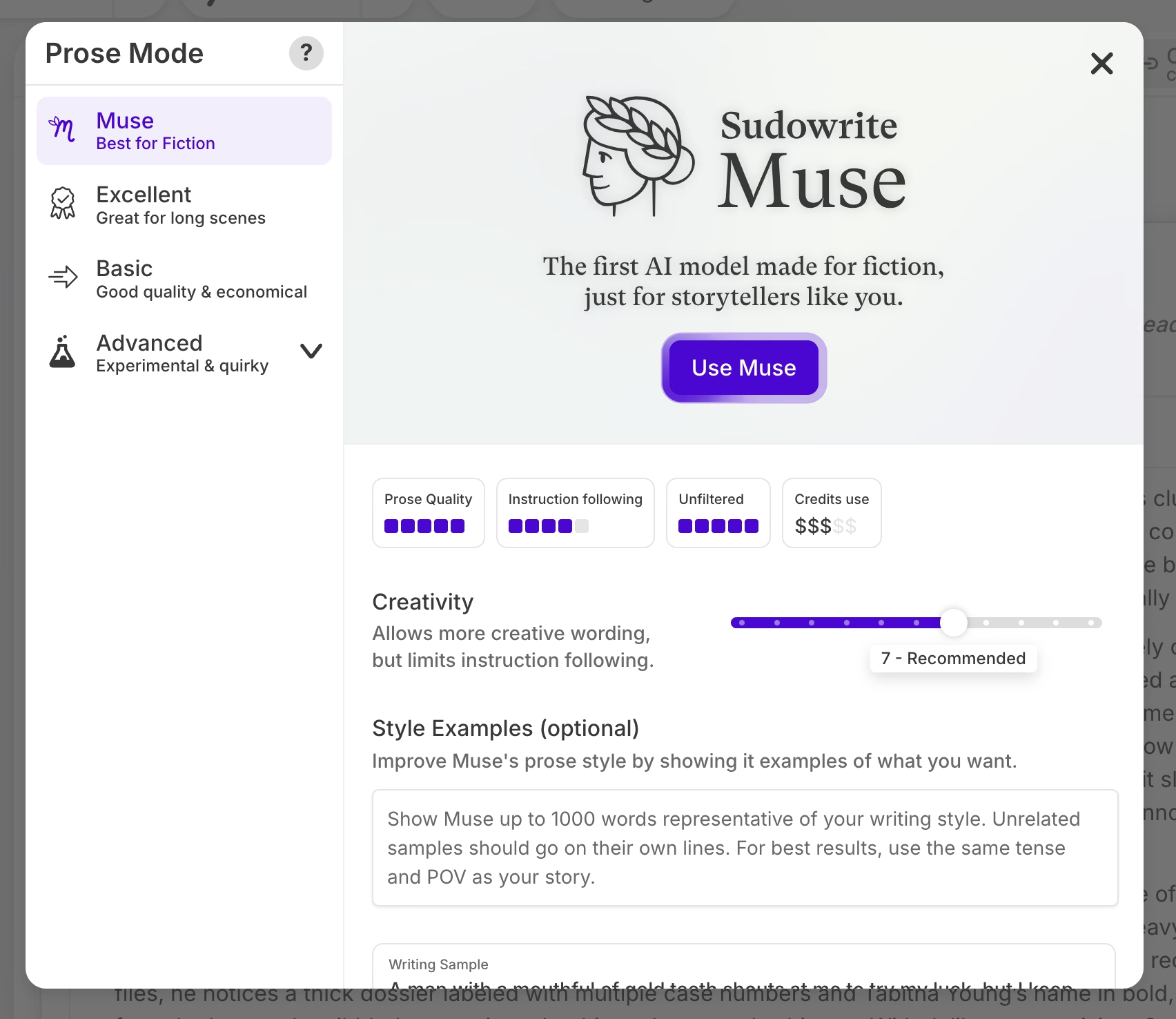
- Fiction-specific AI like Sudowrite preserves your unique style through specialized training and customizable features
- Voice preservation requires tools that understand genre conventions and remember your specific writing patterns
The Voice Robbery in Progress
I remember the first time I fed my manuscript into ChatGPT. What came back was technically correct, grammatically sound, and completely soulless. My noir detective’s sardonic internal monologue had been replaced by something that sounded like a friendly Wikipedia editor.
Here’s what’s happening: most AI models are statistical averages of the entire internet. Your carefully cultivated voice gets smoothed into vanilla because the algorithm thinks “normal” equals “good.” It’s like asking a focus group to rewrite Hemingway.
The problem isn’t that AI can’t write well. It’s that it writes averagely well.
Why Generic AI Kills Your Style
Think about it this way. If you trained a musician by having them listen to every song ever recorded simultaneously, they’d probably produce something that sounds like elevator music. That’s essentially what happened to ChatGPT and similar tools.
They learned from:
- Corporate blog posts optimized for SEO
- Academic papers written in passive voice
- Reddit comments (shudder)
- Customer service scripts designed to sound helpful but not human
No wonder the output feels sterile.
The Fiction-First Approach
Specialized tools like Sudowrite take a different approach. Instead of learning from everything, they focus on fiction. The AI understands that sentence fragments can be powerful. That sometimes you want to break grammar rules for effect. That “She walked” and “She sauntered” create entirely different mental images.
It’s the difference between a general practitioner and a specialist. Sure, both are doctors, but you wouldn’t want a foot surgeon performing heart surgery.
Beyond Writing Tools
Voice preservation matters across the entire creative pipeline. Whether you’re generating cover art with AI image tools or preparing to publish through platforms like PublishDrive, maintaining your unique creative identity should be the priority.
Because at the end of the day, readers don’t connect with perfect prose. They connect with authentic voices. And if AI is going to be part of your process (which, let’s be honest, it probably should be), it needs to amplify your voice, not replace it.
The future of AI writing isn’t about creating content that sounds like AI. It’s about creating content that sounds unmistakably like you.