The Hidden Goldmine of Unfiltered Stories: Why Hollywood’s Book Scouting Needs a Reality Check

Hollywood’s reliance on traditional publishing gatekeepers is filtering out potentially brilliant screen content before it ever reaches producers. New direct scouting services are emerging to bridge this gap and democratize story discovery.

When Publishing News Goes Behind the Paywall: What Writers Are Really Missing

As publishing industry insights disappear behind subscription paywalls, AI tools are democratizing content creation in unexpected ways. This shift is creating both challenges and opportunities for writers navigating today’s complex literary landscape.

Windows Meets AI: Why OpenAI’s Codex Sandbox Matters More Than You Think

OpenAI’s new Windows sandbox for Codex represents a crucial breakthrough in AI safety, allowing artificial intelligence to write and execute code without compromising system security. This development could fundamentally change how we integrate AI tools into professional workflows.

The $725 Billion AI Rejection: When Big Tech Builds What Nobody Wants

While hyperscalers invest $725 billion in AI infrastructure, consumers are actively rejecting AI-generated content across major platforms. This massive disconnect between corporate spending and user preferences suggests we’re witnessing one of tech’s most expensive market misreadings.

When Publicity Firms Turn Literary Agents: The Pine State Pivot That Makes Perfect Sense

Pine State Publicity’s expansion into literary representation targets an underserved market in rural and middle America storytelling. This strategic pivot from publicity to agenting reflects broader industry shifts toward specialized representation.

Stop Chasing Shiny Objects: Why Your Publishing Mission Beats Market Hype Every Time

Indie authors often get trapped in mimetic desire, wanting what other successful authors have instead of focusing on their unique publishing mission. Joe Solari’s approach offers practical tools to maintain creative focus while building a sustainable author business.

Steinbeck Felt Like a Fraud Too: Why Imposter Syndrome Might Actually Be Working

John Steinbeck felt like a fraud while writing his Pulitzer Prize-winning masterpiece, proving that imposter syndrome isn’t a disease but a natural part of the creative process. The key isn’t eliminating these feelings but recognizing them as a sign you’re pushing boundaries and doing meaningful work.

When Your AI Stops Mid-Kiss: The Real Problem with Automated Romance Writing

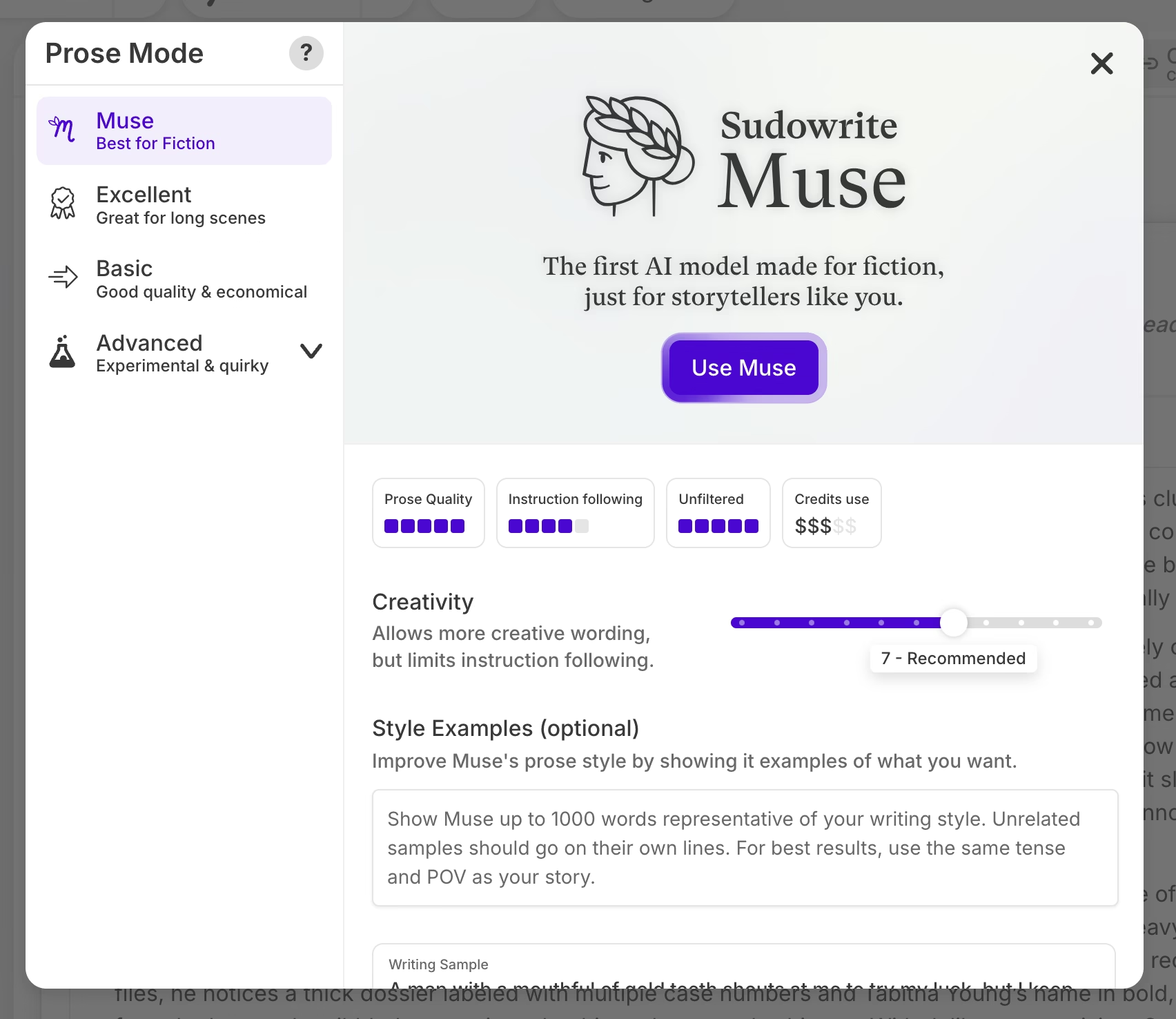
Most AI writing tools fail spectacularly when romance gets steamy, either refusing to cooperate or producing mechanical prose that kills romantic tension. The secret lies in understanding that great intimate scenes require emotional context, character consistency, and sensory detail that only fiction-specific AI models can deliver.

When Silicon Valley’s Fastest Engineers Let AI Write Their Code

NVIDIA engineers are using AI tools like Codex and GPT-5.5 to build production systems, signaling a fundamental shift in how elite technologists approach software development. This isn’t just about coding faster—it’s about redefining what constitutes “real work” in the age of AI assistance.

Item added to cart.
0 items - $0.00