Writing romantasy is like being a magician who also happens to be a therapist.
TLDR: The Three Things Every Romantasy Writer Needs to Know
- Romantasy demands both rigorous worldbuilding AND emotional intelligence in every scene, making it the hardest hybrid genre to write
- Generic AI tools fail because they can’t handle the dual-brain problem of fantasy logic plus romance beats
- Strategic AI use means picking the right tool for fantasy versus romance scenes, not hoping one size fits all
Why I Almost Quit Writing Romantasy (And You Might Too)
Picture this: you’re 35,000 words deep into your manuscript. Your shadow magic system finally makes sense. Your enemies-to-lovers arc is simmering perfectly. Then you hit that scene where your brooding demon prince needs to explain ancient binding spells while also having a vulnerable moment that makes readers forget they’re on public transportation.
I’ve been there. Staring at the cursor, wondering if I need a PhD in both medieval architecture and psychology. The fantasy brain wants consistent magical rules. The romance brain wants authentic emotional beats. Most days, I felt like I was failing at both.
Here’s what nobody tells you about romantasy: it’s not just fantasy with kissing or romance with dragons. It’s architectural. Both elements hold up the entire story structure. Remove either one and everything collapses.
The $610 Million Problem
Romantasy exploded to over $600 million in sales last year, but the writing tools haven’t caught up. Most AI assistants treat all fiction like it’s the same animal. They’re not wrong, exactly. They’re just not right enough.
When I’m worldbuilding, I need an AI that can track magical systems across 80,000 words without contradicting itself. When I’m writing intimate scenes, I need something that understands emotional pacing and tension beats. AI fiction writing tools like Sudowrite get this dual nature because they let you switch between different models for different creative needs.
What Actually Works (After Many Expensive Mistakes)
I learned this the hard way: different scenes need different creative approaches. Now I use:
- Logic-focused AI for magic system consistency and plot mechanics
- Emotion-focused models for relationship development and intimate scenes
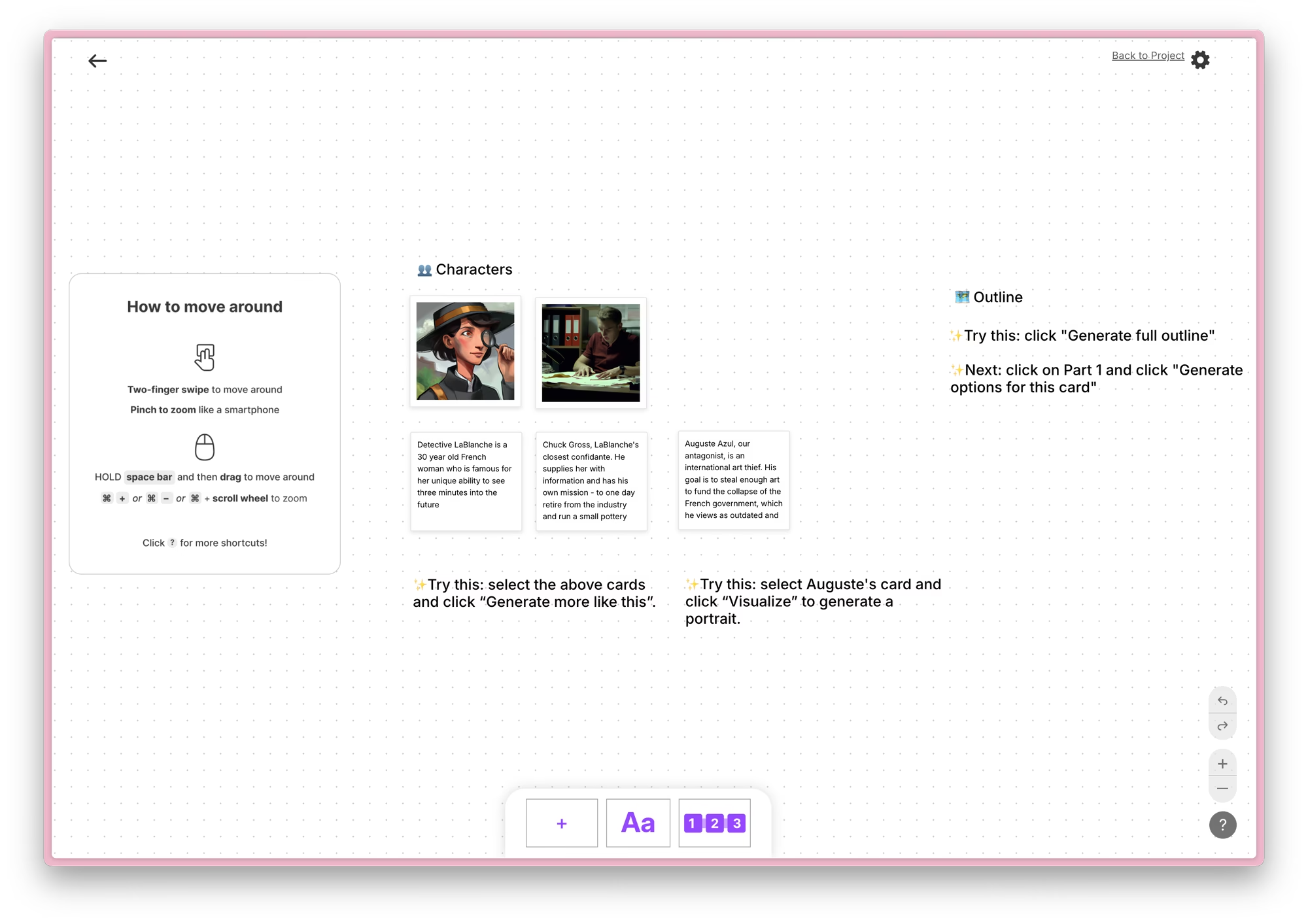
- Visual AI for character designs and world aesthetics
The game changer was discovering AI image generation with commercial licensing for developing consistent character looks. Nothing kills romantic tension like realizing your love interest’s eye color changed three times.
Beyond the Writing: The Full Romantasy Ecosystem
Here’s something I wish someone had told me earlier: writing the book is only half the battle. Romantasy readers are voracious, and they find new books through covers, social media, and strategic publishing across multiple formats.
Once you’ve got a manuscript that balances both fantasy depth and romantic satisfaction, platforms like PublishDrive for publishing books, ebooks, and audiobooks become crucial for reaching readers across different platforms simultaneously.
The romantasy audience doesn’t just want good stories. They want immersive worlds they can escape into and relationships that feel worth the emotional investment. AI can help you build both, but only if you use it strategically rather than hoping for magic.