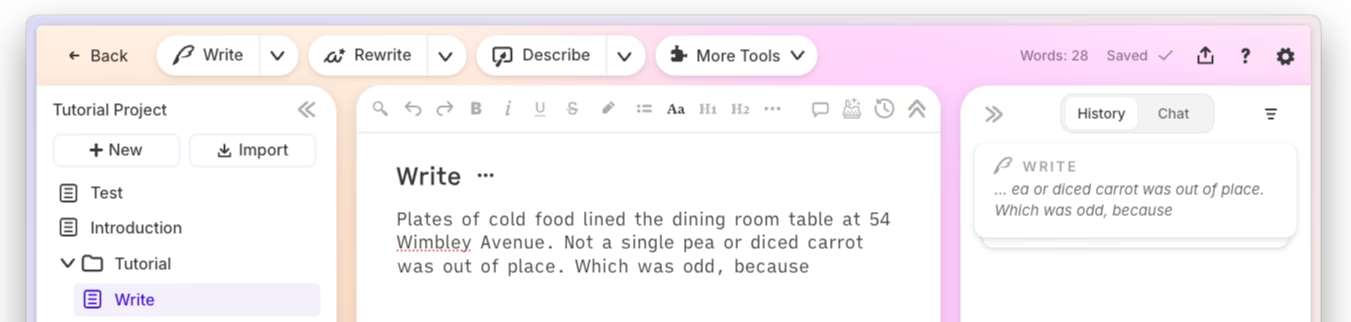
Every writer has been there: you know your character is devastated, but somehow “she felt terrible” just sits on the page like a dead fish.
TLDR: The Essential Points
- Show don’t tell isn’t about fancy prose; it’s about letting readers experience emotions rather than being told about them
- AI writing tools can help generate sensory details when your creative well runs dry, but they work best as collaborative partners
- The key is specificity: one perfect detail beats three generic descriptions every time
The Problem With Emotional Shorthand
I used to think show don’t tell was pretentious writing advice. Why write “his hands trembled as he fumbled with the keys” when “he was nervous” gets the job done in three words? Efficiency, right?
Wrong. Turns out our brains process concrete details differently than abstract labels. When you write “she was angry,” readers understand the concept. When you write “she crushed the paper cup, ice water dripping between her fingers,” they feel the anger in their own grip.
The difference isn’t just stylistic. It’s neurological.
When Your Description Tank Hits Empty
Here’s where things get interesting. Traditional writing advice tells you to dig deeper, observe more, practice sensory exercises. All good advice that completely ignores the reality of deadline pressure and creative burnout.
Sometimes you know exactly what emotion you want to convey, but your brain serves up the same tired metaphors. This is where AI fiction writing tools actually shine. Not as replacements for your creative voice, but as brainstorming partners when you’re stuck.
I was skeptical until I tried it myself. Fed up with describing yet another “concerned expression,” I plugged my scene into an AI tool. The suggestions weren’t perfect, but buried in the output was this gem: “She worried her wedding ring like a prayer bead.” That single detail unlocked the entire character’s anxiety.
The Specificity Trap
But here’s where writers often go wrong: they think more details equal better writing. Actually, it’s the opposite. One perfectly chosen image beats a paragraph of generic sensory overload.
Consider these approaches:
- Generic: “The abandoned house looked scary and old”
- Specific: “Paint peeled from the shutters like sunburned skin”
The second version doesn’t just show age and decay. It suggests something almost biological, something that was once alive. That’s the magic of showing: readers fill in emotional gaps you never explicitly state.
Making It Work in Your Writing
Whether you’re using AI image generation, commercial licensing for visual inspiration or traditional brainstorming, the process stays the same. Ask yourself: what would this emotion look like if I couldn’t name it directly?
Sadness might be cold coffee. Anxiety might be a chewed pen cap. Love might be someone remembering exactly how you take your tea.
The goal isn’t to eliminate every abstract statement from your manuscript. Sometimes “he was furious” is exactly what the pacing needs. But when a moment matters, when the emotion carries plot weight, that’s when showing earns its keep.
And when you’re ready to get those perfectly crafted scenes into readers’ hands, platforms like publishing books, ebooks, audiobooks can help bridge that final gap.
Trust me, your beta readers will thank you.