ChatGPT writes fiction like a talented intern who’s never actually read a novel.
TLDR:
- General AI tools trained on everything produce generic fiction that lacks narrative craft
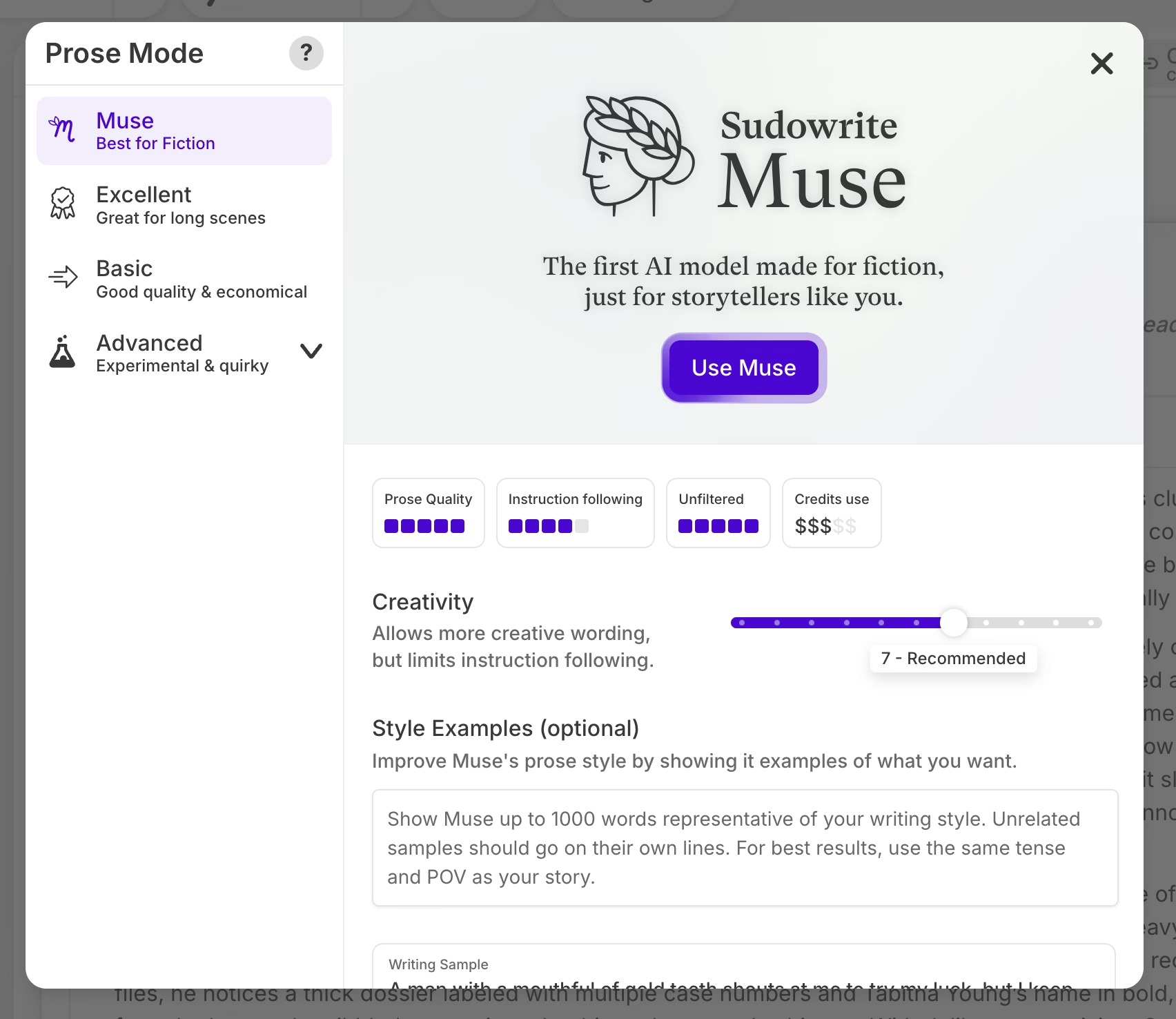
- Sudowrite Muse offers fiction-specific training with granular creativity controls
- The right AI writing tool depends entirely on understanding what fiction actually requires
The Uncomfortable Truth About AI Fiction
I’ve watched dozens of writers get seduced by the promise of AI assistance, only to emerge months later with manuscripts that read like they were dictated by a very polite committee. The prose is technically flawless. The grammar sparkles. And every single sentence feels like it was assembled in a factory.
Here’s what nobody mentions in those breathless “AI will revolutionize writing” articles: most AI tools treat your thriller the same way they’d approach a quarterly business report. Same underlying training, same optimization goals, same fundamental misunderstanding of what makes fiction work.
Actually, let me back up. That’s not quite fair to the AI tools themselves.
It’s Not About Intelligence, It’s About Training
The real issue isn’t that AI fiction writing tools lack capability. ChatGPT can generate thousands of words before your coffee cools. Claude can maintain character consistency across chapters. The problem runs deeper: they’re trained on everything.
Legal briefs. Reddit threads. Technical manuals. Your cousin’s resume. Wikipedia entries about税policy. When you ask these models to write fiction, they’re drawing from this massive, generalized dataset where narrative craft represents maybe 0.3% of the training material.
Sudowrite Muse flips this entirely. Instead of treating fiction as one category among thousands, it was built specifically for narrative writing. The difference shows up immediately:
- Dialogue that sounds like actual human conversation
- Tension that builds through sentence rhythm, not just plot events
- Character voices that remain distinct across scenes
Control That Actually Matters
Most writers I know have tried AI tools and abandoned them for the same reason: unpredictable output. You never knew if you’d get purple prose or flat description, whether the AI would match your established tone or veer into completely different territory.
Muse’s Creativity Dial solves this with embarrassing simplicity. Want conservative, on-brand prose? Set it to 2. Need wild brainstorming energy? Crank it to 9. The control feels intuitive in a way that most AI interfaces completely miss.
For visual storytelling, tools like AI image generation with commercial licensing offer similar specialized focus. And when you’re ready to share your work, platforms like publishing for books, ebooks, and audiobooks handle the distribution complexity.
The Real Question
Maybe the issue isn’t whether AI can write fiction. Maybe it’s whether we’ve been using the wrong AI all along. Because if you’re trying to write a novel with a tool designed for everything except novels, the problem might not be the technology.
It might be the choice.