Most writers discover their biggest plot holes at 2 AM when a reader gleefully points them out in a one-star review.
TLDR: The Big Three
- Plot holes happen because nobody can remember 80,000 words perfectly, and traditional AI forgets everything between sessions
- Specialized fiction AI with chapter continuity features can track narrative threads across 25+ chapters simultaneously
- The real game changer isn’t just avoiding mistakes, it’s maintaining narrative consistency that feels effortless
The Amnesia Problem
I once spent three chapters building tension around a character’s mysterious scar, only to have her wearing a tank top in Chapter 12 with no mention of said scar. My beta readers caught it immediately. I’d been so focused on dialogue and pacing that I completely forgot my own worldbuilding.
This is where most writing advice gets it wrong. Plot holes aren’t laziness or poor planning. They’re a memory bandwidth problem. Your brain is juggling character arcs, timeline consistency, physical descriptions, magical rules, and about seventeen other narrative threads. Something’s going to slip.
Generic AI tools like ChatGPT make this worse, not better. Feed it Chapter 20, and it has zero context about what happened in the previous nineteen chapters. It’s like asking someone to continue a conversation they never heard the beginning of.
When AI Actually Remembers
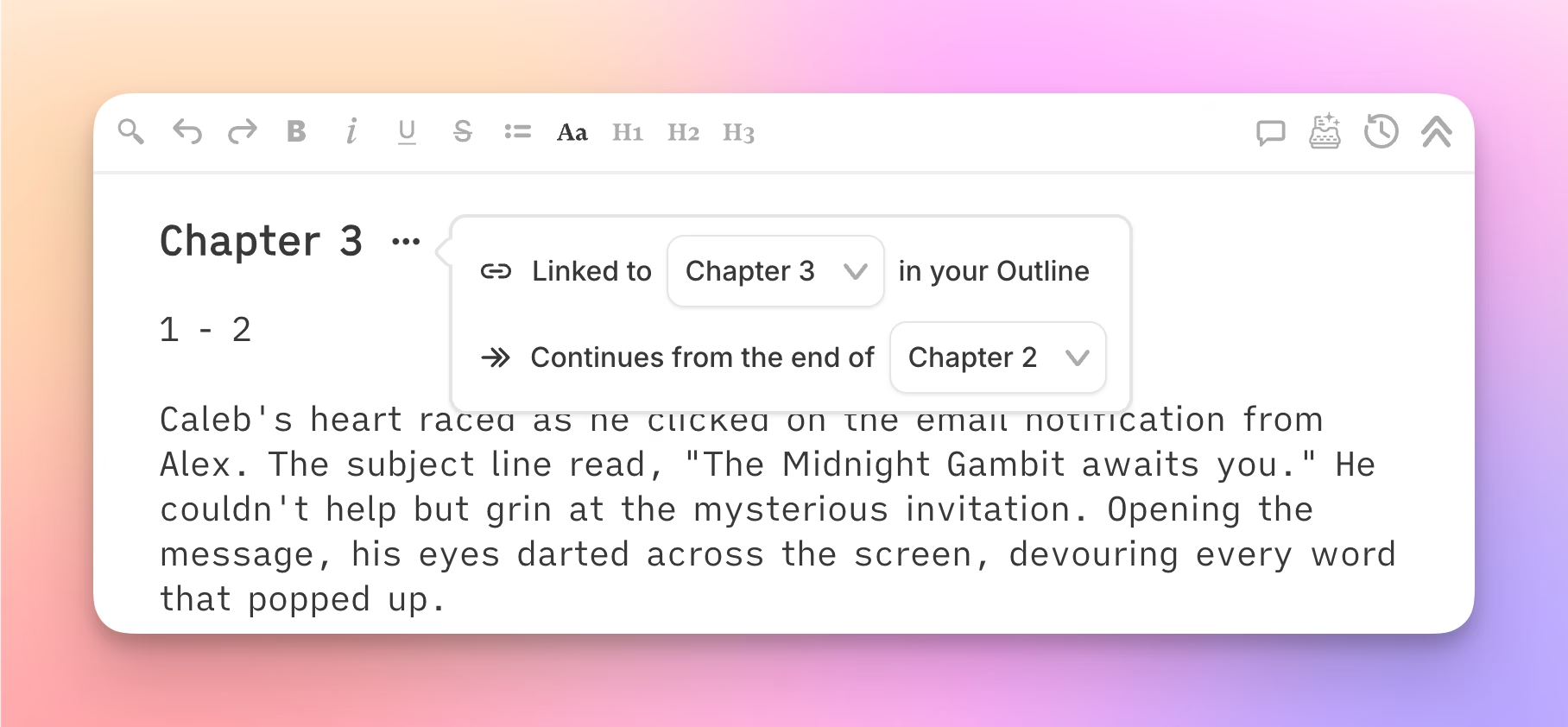
Here’s what changed my writing process completely: AI that maintains narrative memory across entire manuscripts. AI fiction writing tools now link multiple chapters together, so the AI reads your actual story context before generating new content.
The difference feels enormous when you’re drafting. Instead of constantly second-guessing whether your protagonist still has that magical artifact from Chapter 3, you can focus on what matters: telling a compelling story.
The Five Plot Hole Types That Kill Trust
- Continuity breaks: Eye color changes, forgotten injuries, disappearing objects
- Timeline contradictions: Events happening out of sequence or impossible timing
- Character inconsistencies: Personality shifts without explanation
- World-breaking moments: Magic systems that suddenly work differently
- Logical gaps: Cause and effect chains that don’t connect
Beyond Just Avoiding Mistakes
The real benefit isn’t just catching errors. Actually, let me correct that. The real benefit is writing with confidence. When you know your AI partner has read and remembered your entire manuscript, you can push narrative boundaries without constantly fact-checking yourself.
This matters especially when you’re ready to publish. Whether you’re heading to publishing books, ebooks, audiobooks or creating cover art through AI image generation, commercial licensing, consistency across your entire story becomes crucial.
The Writing Feels Different
There’s something almost magical about drafting when you trust your tools to remember what you can’t. The creative flow feels less interrupted by logistical concerns. You can focus on the emotional truth of a scene instead of frantically checking whether your character still owns the horse they rode in Chapter 7.
Plot holes will probably never disappear completely. But they don’t have to be the thing that breaks your readers’ trust in your story world.