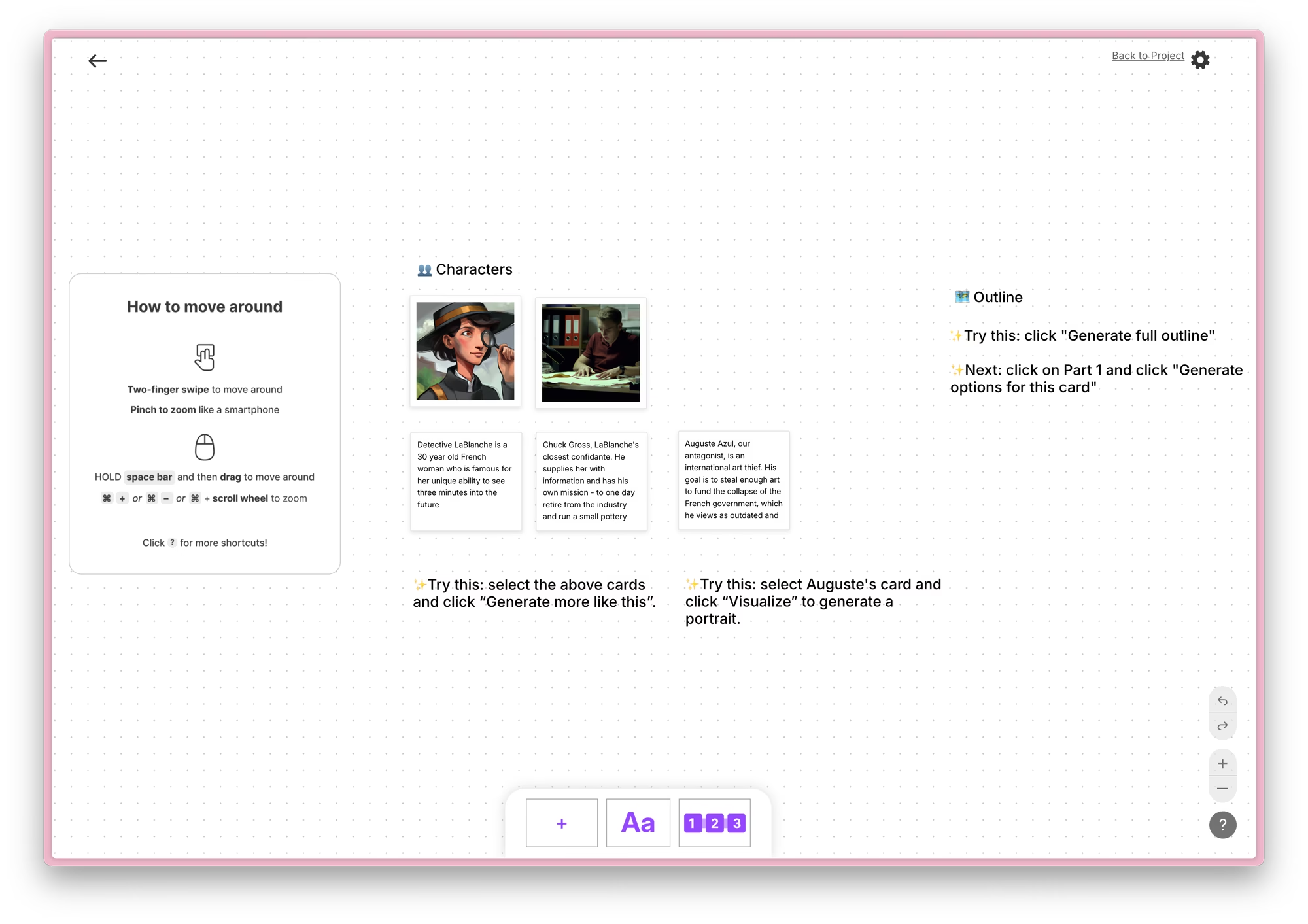
Visual story planning isn’t about building a creative cage—it’s about drawing a treasure map you’re free to rewrite whenever the mood strikes.
TLDR
- Visual planning tools help writers finish novels 6 months faster than traditional linear outlines
- Your brain processes spatial information more efficiently than sequential text, making visual maps ideal for complex storylines
- Even discovery writers benefit from flexible visual frameworks that adapt to creative spontaneity
The Pantser’s Paradox
I used to think planning was the enemy of inspiration. There I’d be, 60,000 words deep into what felt like literary gold, only to realize my protagonist had somehow forgotten their main goal around chapter eight. The freedom to discover felt intoxicating until it became suffocating.
Here’s what changed everything: understanding that visual planning isn’t about rigid control. It’s spatial thinking. When you can see your entire story spread out like a constellation rather than buried in linear text, patterns emerge. Plot holes become obvious. Character arcs start making sense again.
Why Your Brain Craves Visual Structure
Traditional outlines feel like homework because they fight against how we naturally process information. Think about it—when you’re explaining a complex story to a friend, you don’t recite chapter summaries. You gesture wildly, draw connections, maybe sketch relationship dynamics on a napkin.
That napkin method? That’s visual planning in its purest form.
Tools like AI fiction writing platforms have transformed this concept into something genuinely useful. Instead of static index cards, you get dynamic, interconnected story maps that evolve with your ideas.
The Practical Magic
Visual planning shines brightest when you’re juggling multiple story elements:
- Character motivations that shift across acts
- Subplots that need to weave together seamlessly
- Themes that should strengthen rather than contradict each other
- Pacing that builds tension without exhausting readers
I’ve watched writers transform chaotic manuscripts into coherent narratives simply by moving story elements around visually. It’s like solving a puzzle where you can finally see all the pieces at once.
Beyond the Manuscript
Once your story structure solidifies, the creative process expands. AI image generation, commercial licensing tools can help visualize characters and settings. Eventually, publishing books, ebooks, audiobooks becomes the natural next step.
Visual planning isn’t about killing spontaneity. It’s about creating space for inspiration to flourish within a framework that actually supports your creative ambitions rather than sabotaging them.