Planning a novel without losing your creative soul might sound impossible, but 79% of writers who outline actually finish their first draft.
TLDR:
- Visual story planning helps you see structural problems before they derail your entire manuscript
- Your brain processes spatial information faster than sequential outlines, making visual maps more intuitive
- Writers using visual planning methods finish novels 6 months faster on average
The Uncomfortable Truth About Pantsing
I used to be that writer. You know the one. Fifty thousand words deep, convinced that planning would murder my creativity like a particularly vindictive editor with a red pen. Then I hit the wall. Not the good kind of wall where you push through and discover something brilliant, but the soul-crushing kind where your protagonist stands in a coffee shop for three chapters because you have absolutely no idea what happens next.
Here’s what nobody tells you: your brain wasn’t designed to juggle six character arcs, a ticking clock subplot, and that romantic thread that may or may not be going anywhere. All in a linear Google Doc. That’s not planning, that’s digital hoarding.
Why Your Eyes Matter More Than You Think
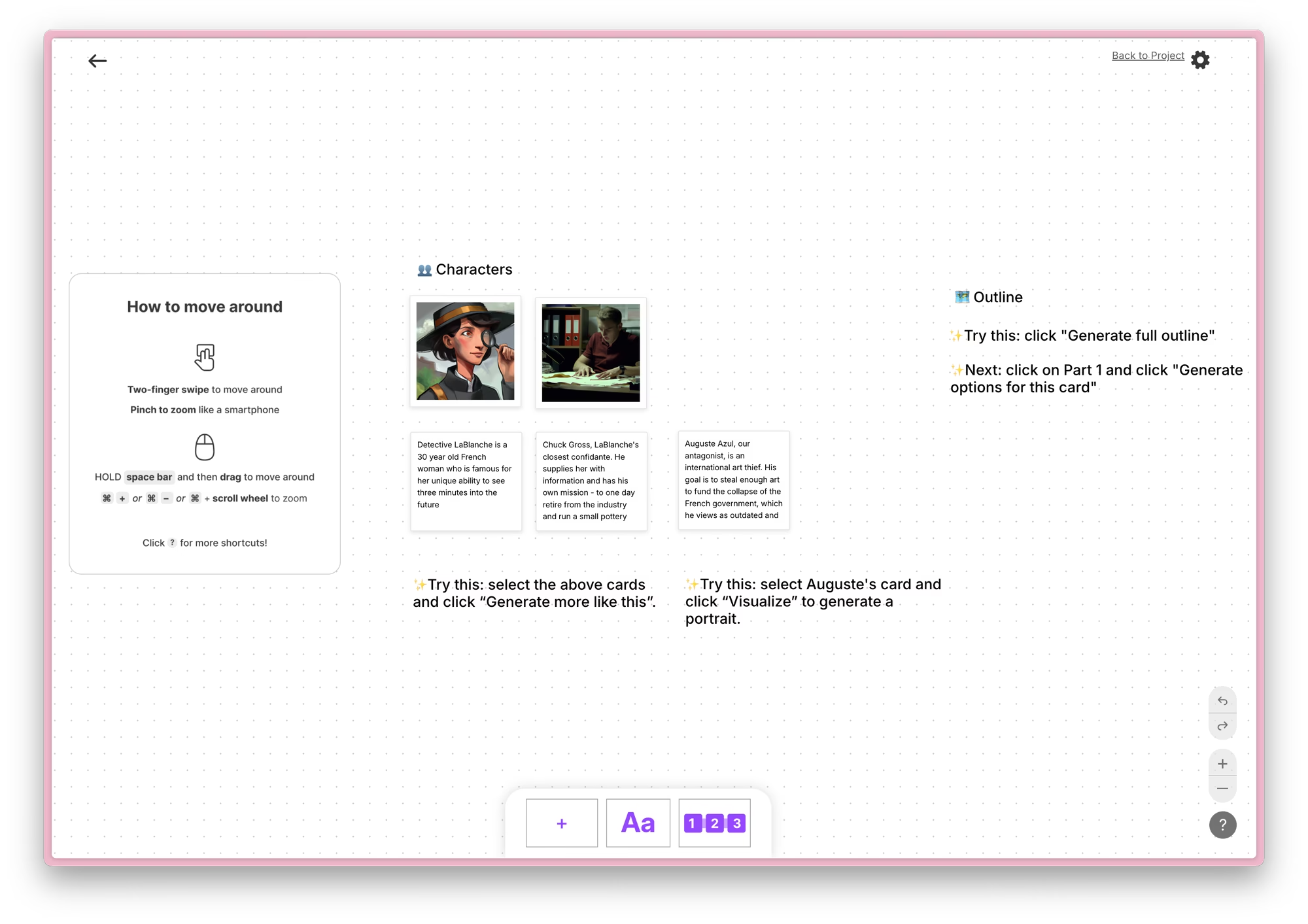
Visual story planning works because we process spatial information about 60,000 times faster than text. Think about it. When you walk into a room, you don’t read a sequential list: “Door. Window. Chair. Suspicious stain on carpet.” You see the whole space instantly.
Tools like AI fiction writing platforms are finally catching up to how our brains actually work. Instead of forcing your story into paragraph form, you can spread it out like those index cards Vladimir Nabokov used, except these ones talk back and suggest plot twists.
The Real Cost of Winging It
Let me paint you a picture with numbers that actually matter:
- Average completion time drops from 14 months to 8 months with structured planning
- 67% of published authors use some form of visual planning
- Visual planners average 23% more consistent writing sessions
That six-month difference? That’s not just statistics, that’s your book existing in the world instead of languishing in revision hell.
Making Peace with Structure
Planning doesn’t mean sacrificing discovery. Actually, let me correct myself. Good planning creates space for better discoveries. When you can see your story’s skeleton laid out spatially, you spot opportunities that linear outlines bury completely.
Whether you’re generating cover concepts with AI image generation, commercial licensing tools or preparing to navigate publishing books, ebooks, audiobooks, having a clear visual map of your story makes every step smoother.
The Bottom Line
Your creativity won’t die if you give it a map. It might actually thrive. Because there’s nothing creative about being stuck at chapter twelve, wondering why your protagonist is still standing in that damn coffee shop.